
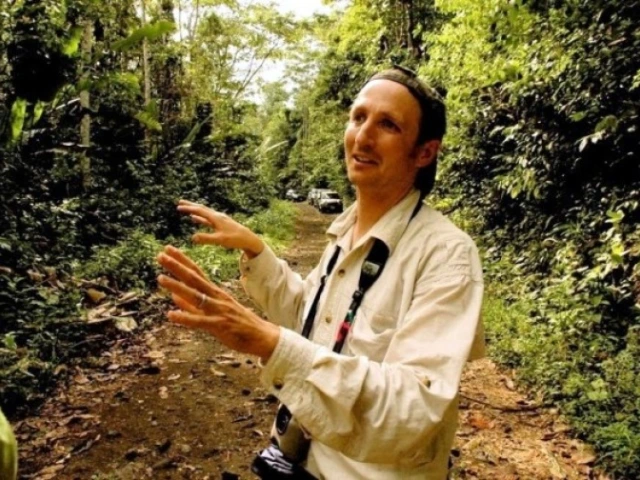
Tom Lovejoy was a pioneer in conservation science.
Tom was as comfortable in the rainforest as he was in boardrooms and the halls of government. He led the way in addressing threats to biodiversity with science-informed policy and management plans.
The Lovejoy Fellowship carries on this legacy by empowering early career scientists and practitioners to pursue novel research that bridges biodiversity science and actionable conservation solutions. This flagship postdoctoral program provides research support, mentorship, leadership skills, and networking opportunities to empower the next generation of conservation scientists as they work towards a world where biodiversity is valued, and its protection is guided by scientific evidence and local wisdom.

NatGeo
The Tom Lovejoy Conservation Fellowship focuses on the global grand challenges of climate change in biodiversity and conservation science.
Fellows hold a Postdoctoral Research Appointment at the University of Arizona and conduct cutting-edge research, contribute to interdisciplinary initiatives, and help translate scientific insights into solutions.
Lovejoy Fellows are co-mentored by faculty and community partners to translate scientific insights into solutions over the two year program. The Fellowship emphasizes applying quantitative analysis skills to cross-disciplinary frameworks and core research themes:
Application Process
Submit your application by January 4, 2027. Your cover letter must:
- Identify 1-2 eligible Lovejoy faculty mentors you are interested in working with and explain the primary research directions you would want to pursue in collaboration with these faculty members.
- Describe your experience with or interest in inter- or transdisciplinary research.
- Explain how this experience will positively impact your career trajectory.
You must reach out to Lovejoy faculty mentors before submitting your application. We encourage you to reach out before December 15th. If you are proposing to bring in external partners, please discuss details with your potential mentor.
Questions? Reach out to Phoebe Meixner (pmeixner@arizona.edu).
Frequently Asked Questions
The Lovejoy Center and fellowship mentors are located in Tucson, Arizona. In addition to in-person expectations from your mentors and community partners, we will host in-person team building gatherings, professional development workshops, and other events on campus. Twice-monthly all hands meetings are conducted in person as much as possible. This leads us to an expectation that you will be based in Tucson. However, we do not hold an expectation that you will be physically on campus for the entire work week. Your exact schedule is expected to be flexible and should be grounded in your preferences, mentor’s lab expectations, and the requirements of your research.
Yes! If your current home is more than 50 miles away, you can request a flat $2,000 moving allowance to be included on your offer letter. This allowance is 100% taxable and included on your W-2. The full policy is here.
Unfortunately, no.
This is a fellowship for early career researchers. Applicants must have completed their PhD from an accredited institution by the fellowship start date, and not have completed their PhD more than five years before the fellowship start date.
Additionally, applicants may bring no more than 3 prior years of postdoctoral experience given U of A maximum of 5 years total postdoctoral experience.
Outstanding U of A benefits include health, dental, and vision insurance plans; life insurance and disability programs; paid vacation, sick leave, and holidays; U of A/ASU/NAU tuition reduction for the employee and qualified family members; retirement plans; access to U of A recreation and cultural activities; and more!
The University of Arizona has been recognized for our innovative work-life programs. For more information about working at the University of Arizona and relocations services, please click here.
We will not use any AI to review your application. Please be thoughtful about your own use of AI to create your application. Thank you!

"Bringing on Desiree skyrocketed our work. We have accomplished more than we ever thought we could, with our vector-borne disease research being recognized both nationally and internationally. Our findings have identified key areas of interest for future disease outbreaks which has led to on-the-ground public health action to ensure the safety and protection of Arizonans."
––Dr. Leigh Combrink, Lovejoy Fellowship Faculty Mentor
Left: Dr. Desiree Bliss catches a mosquito on the fly with various materials in the room.
Current Lovejoy Fellows: Cohort 1
Cohort 1 began in July 2026 and will continue through June 2028, overlapping for a year with our incoming Cohort 2 to provide peer-mentorship and expanded opportunities for collaboration.
Save the Date! Cohort 1 will host an informational webinar about their experience as Lovejoy Fellows on December 10, 2026 from 3-4pm AZ.


Eligible Mentors for Cohort 2
Lovejoy Fellowship Affiliates who are eligible and available to mentor incoming Cohort 2 fellows are highlighted in this section and have a Cohort 2 Eligible Mentor badge on their bio.
As part of the application process, you must identify 1-2 eligible Lovejoy faculty mentors you are interested in working with and explain the primary research directions you would want to pursue in collaboration with these faculty members. You must reach out to Lovejoy faculty mentors before submitting your application and you are encouraged to reach out before December 15th. If you are proposing to bring in external partners, please discuss details with your potential mentor.
All Lovejoy Fellowship Affiliates, including those not mentoring this year, are listed at the bottom of this page so you can see the research group you would join as a Lovejoy Fellow!

Jesse Alston

Loren Buck

Leigh Combrink
Brian Enquist

Kacey Ernst

Rachel E. Gallery

Aaron Lien

Sabrina McNew

Dave Moore

Jessi Rick

Cristian Román-Palacios

Willem van Leeuwen
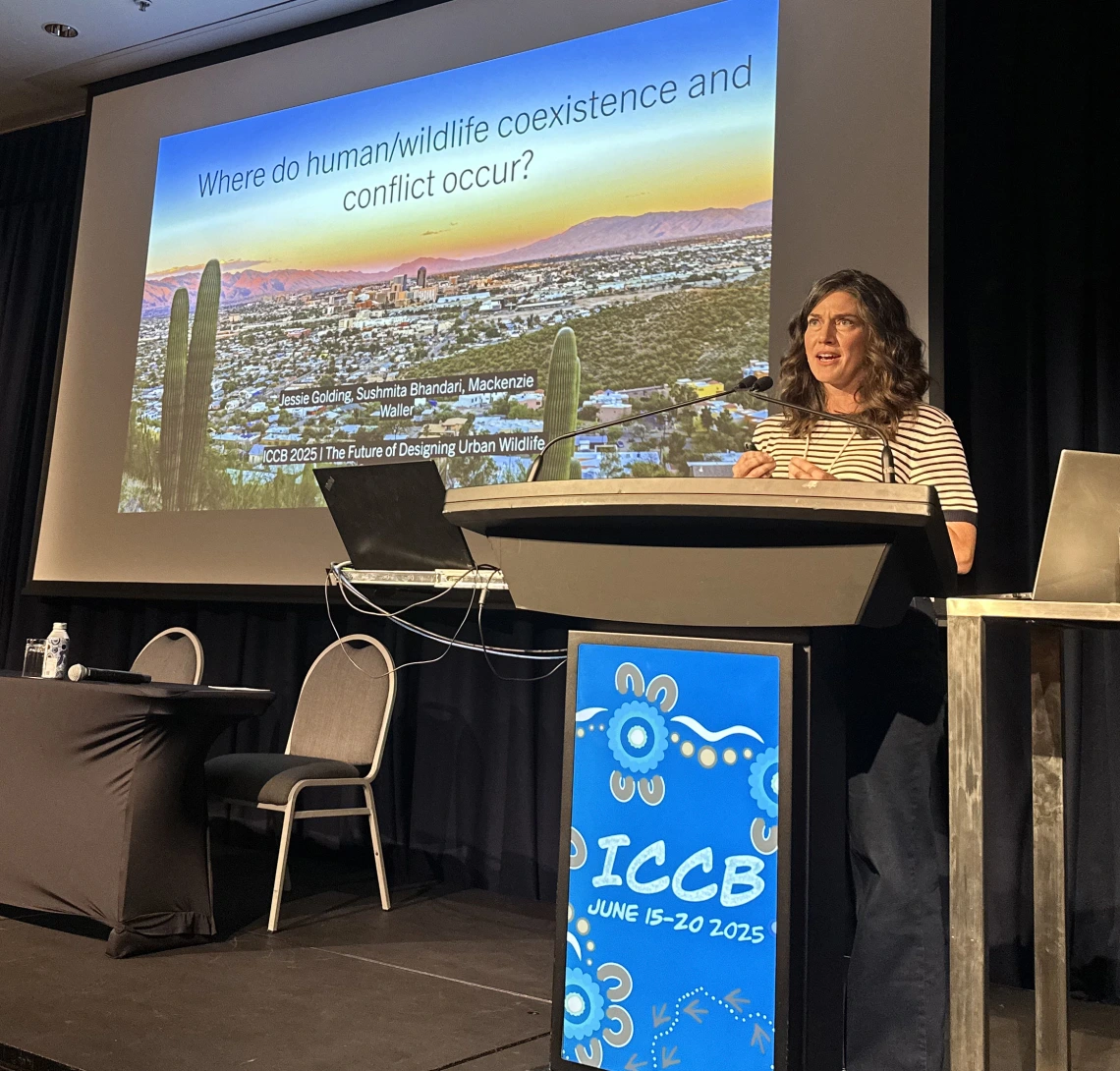
“My work combines ecology, social and policy science, and design to bridge the gap between scientific knowledge and real-world conservation. By partnering with practitioners, I explore challenges in applying science-informed solutions and help to create new ways of understanding this space. For example, in the City of Tucson I am working to understand what features of the urban environment facilitate coexistence or conflict between wildlife and people. This work can directly inform how the City of Tucson approaches wildlife conservation and provisions for resident’s access to nature.”
––Dr. Jessie Golding, postdoc alum (pictured right as an invited symposium leader at ICCB 2025)

Support the Fellows
The Lovejoy Fellows are on the forefront of action-oriented biodiversity conservation research. Make an all-at-once gift to make an immediate impact in this critical time through research and salary support, or sustain the program for the next generation of conservation scientists with an endowment contribution.
From the Sonoran Desert to the Amazon, your generosity keeps this vital work moving forward. Thank you for making an impact with us.
All Lovejoy Fellowship Affiliates
Eligible mentors for Cohort 2 are listed above and have the Cohort 2 Eligible Mentor badge.